

APPDES / Catalytic ALCUP™
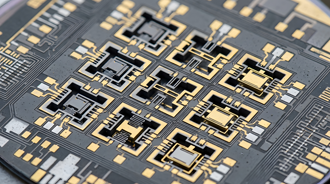
These desmear products were engineered for SAP. Advantages include high peel strength, even with low profile resins, efficient smear removal in BVHs, and compatability with major SAP resins. Ion alkaline palladium catalyst for palladium reduces Pd concentration to >50ppm.
PEA Series
Electroless Coppers with ultra-low internal stress: <50 MPa; Exceptional initial reactivity, excellent coverage of thru holes and blind vias. EDTA and cyanide-free.
THRU-CUP™ EVF-YF4
Fills through-holes and blind vias, and pattern plates with exceptional uniformity. It maintains excellent tensile and elongation throughout bath aging, and is easily controlled by CVS.
EPITHAS™ NPR-18
Mid-phos electroless nickel for fine line clarity in silicon wafer plating and UBM of copper and aluminum. Stable bath produces bridge-free deposits; nickel layer adheres to the IC and creates a diffusion barrier. (Also available: Epithas NPR-18 CMOS-compatible electroless nickel.)
ALTAREA™ TPD-23
Autocatalytic electroless palladium bath is ideally suited for surface mount applications, including those with fine patterns. This pure palladium bath has excellent wire bonding characteristics for PCBs and IC packages, and excellent solderability using lead-free solder.
GOBRIGHT™ TWX-42 RAIG
(Reduction-Assisted Immersion Gold) Environmentally favored process for ENIG, ENEPIG and EPIG is a 5th generation "mixed reaction" gold. It produces a uniform, non-porous pure gold deposit. Displacement initially occurs on the nickel surface; the auto catalytic reaction that follows prevents nickel corrosion.
TWX-42 is a low concentration (0.5 g/L) bath for deposition on Nimuden™ NPR-8 Electroless Nickel (ENIG) and Electroless Palladium (ENEPIG and EPIG.) The RAIG (immersion and electroless) bath can produce significantly thicker gold deposits than standard immersion golds.
ENEPIG
is the leading final finish process for packages that require soldering and wire bonding, with lead-free SAC type alloys. Notably, ENEPIG is immune to "black pad." Palladium is plated onto the electroless nickel via chemical reduction, as opposed to a displacement reaction, so there is no opportunity for compromise of the electroless nickel layer.
EPIG / EPAG
The EPIG process deposits palladium directly onto copper. Eliminating the nickel reduces buildup on circuits, and circuits can be controlled with smaller geometries.
EPIG offers significant advantages for microwave, flex circuits, and other applications where flexibility is needed. It is highly solderable and wire-bondable.
EPAG facilitates the deposition of palladium over copper without a nickel layer. It has a relatively short cycle, is water and energy-efficient, and enables gold thickness up to 8 µm using RAIG.